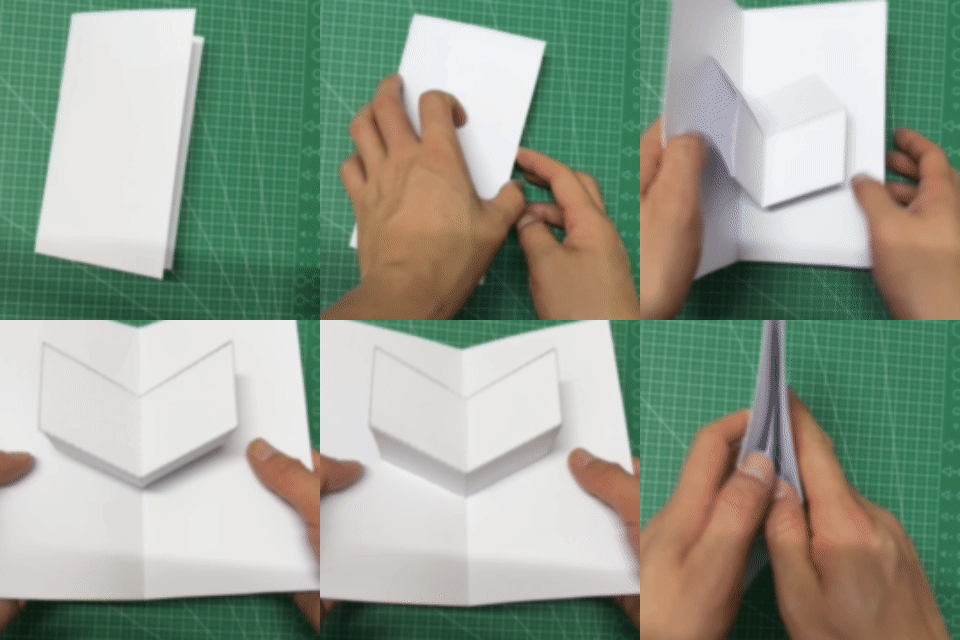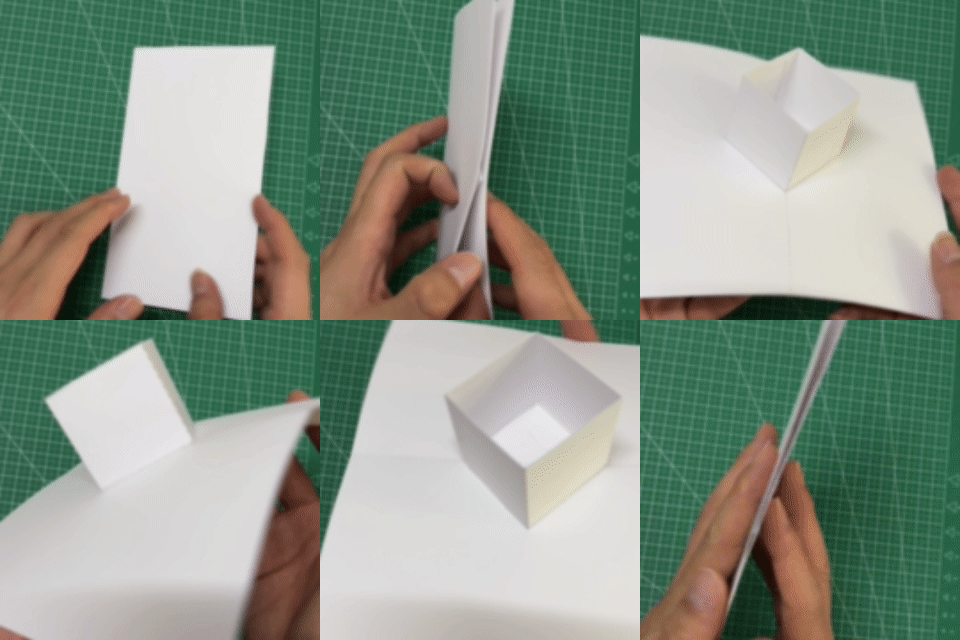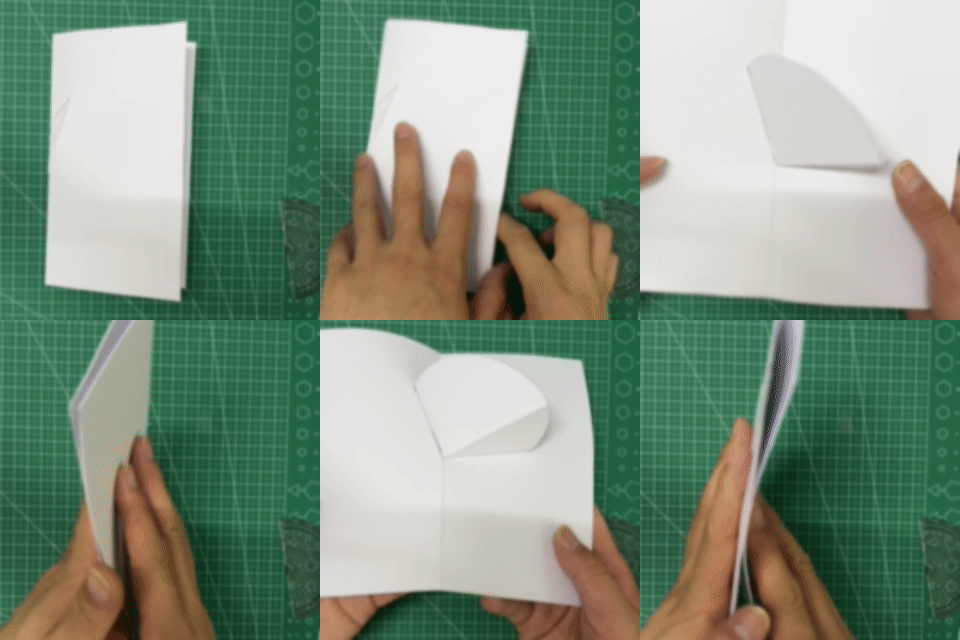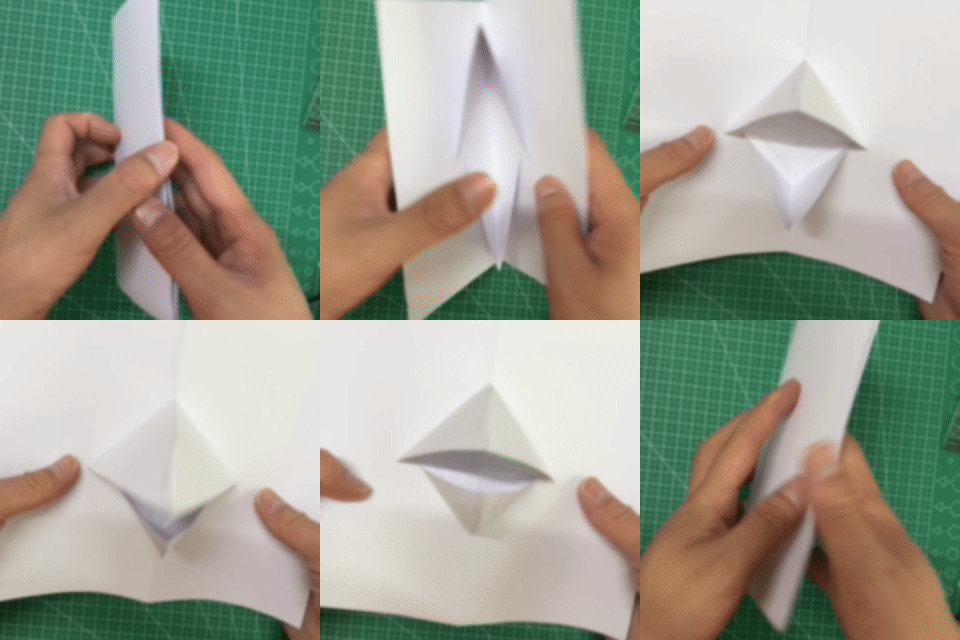
The 180 degree opposing V-fold beak mechanism is a three-dimensional paper structure built from two opposing V-fold units. As the page opens, the two V-folds create a motion similar to a bird beak opening. When the page closes, the structure folds back down neatly, combining movement with structural elegance.
This mechanism uses the angle changes and support relationship between the two opposing V-folds to produce a clear opening-and-closing action through a full 180 degree spread. It works especially well in pop-up books, interactive greeting cards, and biomimetic structure design. Compared with a basic V-fold, it places more emphasis on the correspondence and synchronized movement between two linked structures.
As an expressive dynamic mechanism, the 180 degree opposing V-fold beak mechanism is suitable both as an advanced V-fold practice model and as a foundational module for more complex mechanical paper structures.
Mechanism Category
Primary Category: 180 Degree Structure
Core Mechanism: Opposing V-Fold
Structural Traits: Dynamic Mechanism / Biomimetic Structure / Support Structure / Dual V-Linkage Motion
Typical Uses: Pop-Up Books / Interactive Cards / Biomimetic Paper Structures / Advanced V-Fold Practice
Let's fold it together. Here are the step-by-step instructions:
Step-by-Step Guide
Step 1: Prepare the materials and tools
Prepare an A4 printout of the 180 degree opposing V-fold beak mechanism template, and print it on 250g Dutch white card so the structure has enough stiffness during opening and closing. Also prepare a craft knife or scissors, glue or double-sided tape, and a cutting mat or carving board. Thicker paper improves the stability of the opposing V-fold structure, while accurate cutting tools help keep the two beak units symmetrical and coordinated in motion.
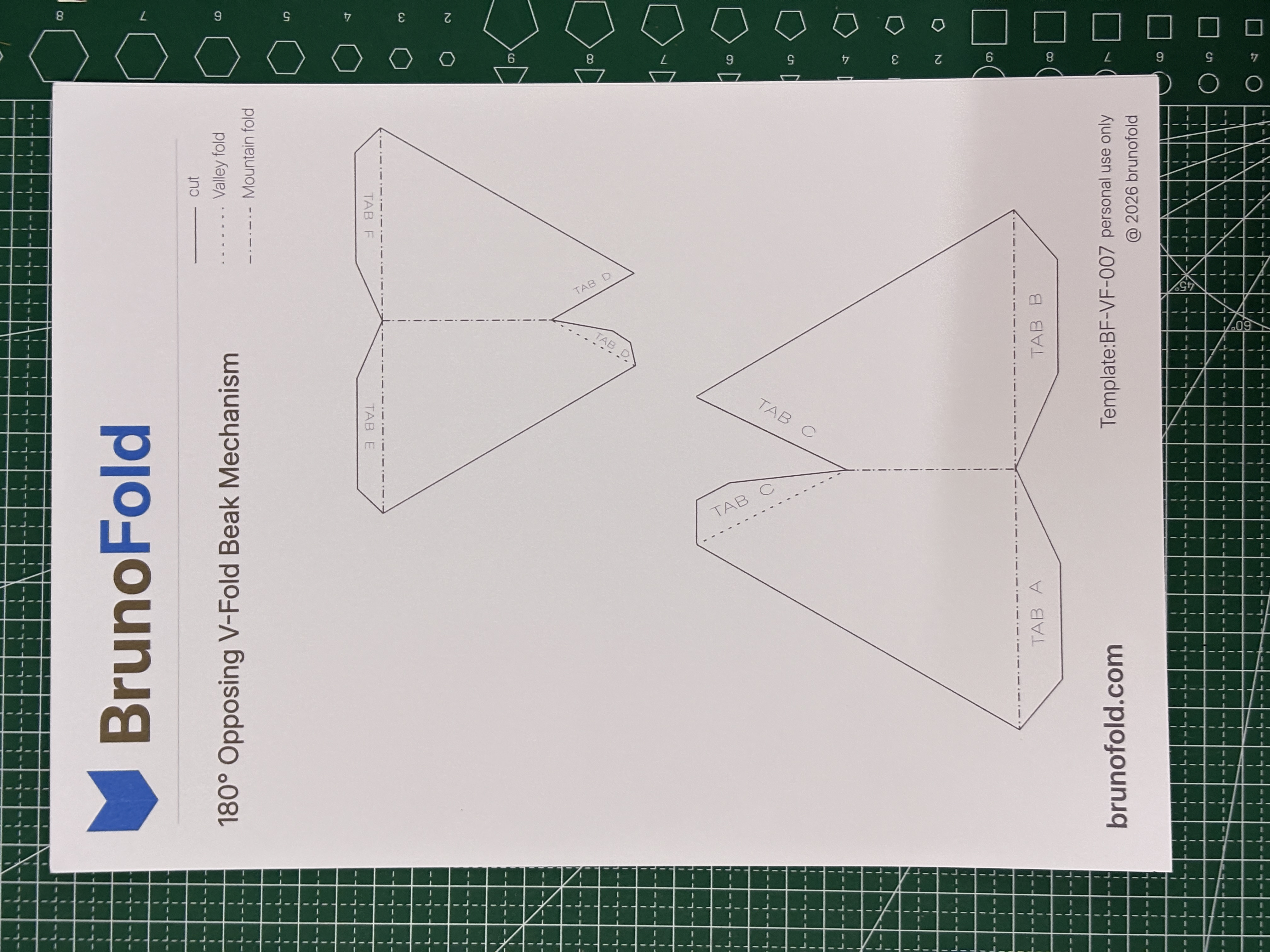
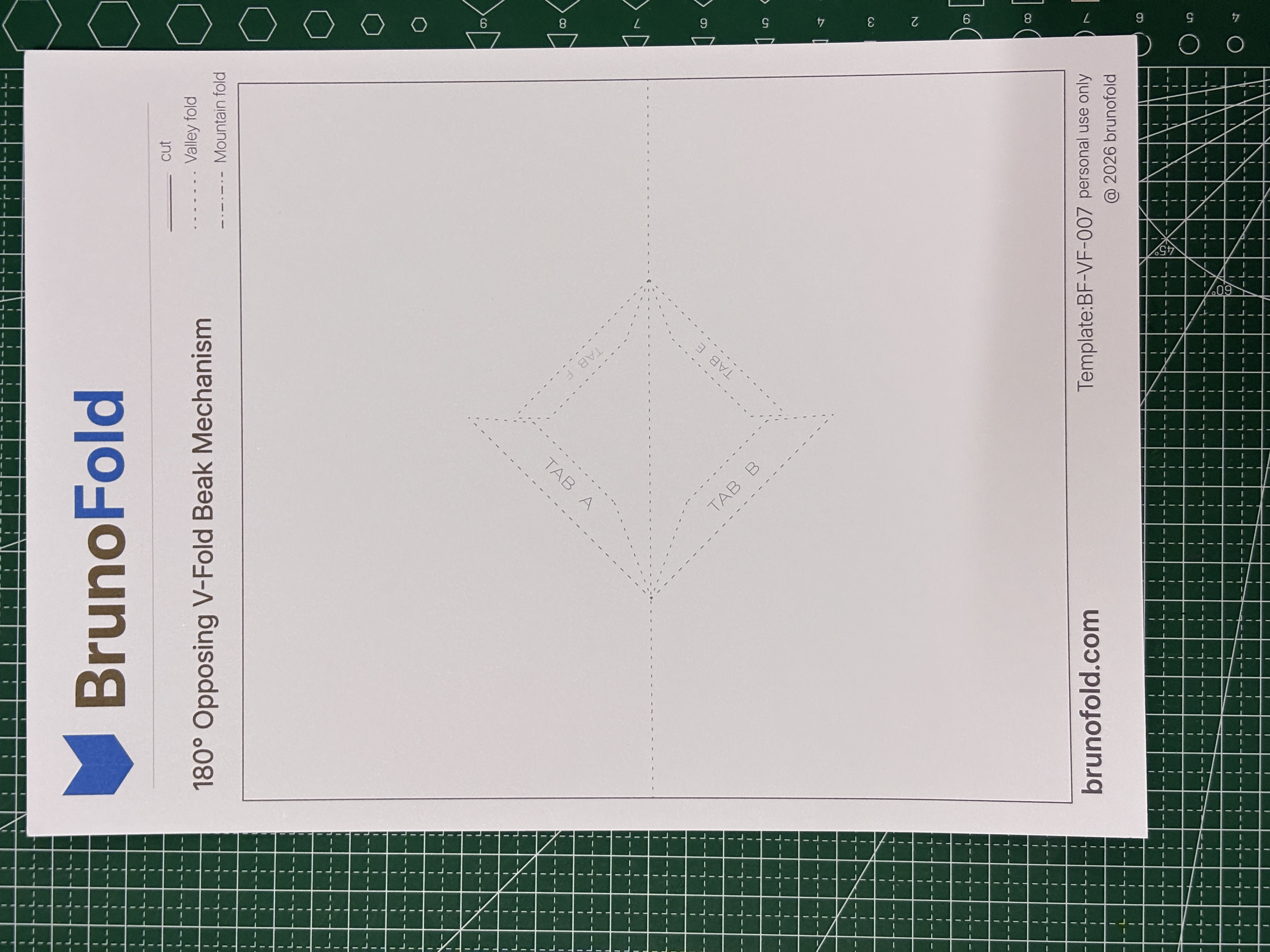
Step 2: Cut the template and score the fold lines
Cut carefully along the outer contour of the template, then focus on scoring along the dashed fold lines. With the help of a ruler, use an empty ballpoint pen, a scoring stylus, or another blunt tool to press along both the mountain folds and valley folds so the creases become clear and controlled. Proper scoring helps the paper form clean folding paths and reduces distortion caused by the linked motion of the two opposing structures, keeping the beak movement smooth and natural.
Step 3: Fold slowly and check the opening motion
Fold the two opposing V-fold structures slowly along the scored lines, deepen the creases gradually, and test how the beak mechanism moves through the full 180 degree opening cycle. Check whether both sides stay symmetrical, whether the beak opens and closes in sync, and whether the structure folds back flat when closed. If the motion feels blocked or the angle drifts, adjust the crease lines and rescore where needed to achieve a smoother and more stable result.
Steps 2 and 3 currently reuse the Chinese visuals because separate English versions were not provided.
Next Article
180 Degree Opposing V-Fold Tent Mechanism Tutorial | Dual V-Supported Linkage Structure
Link coming soon