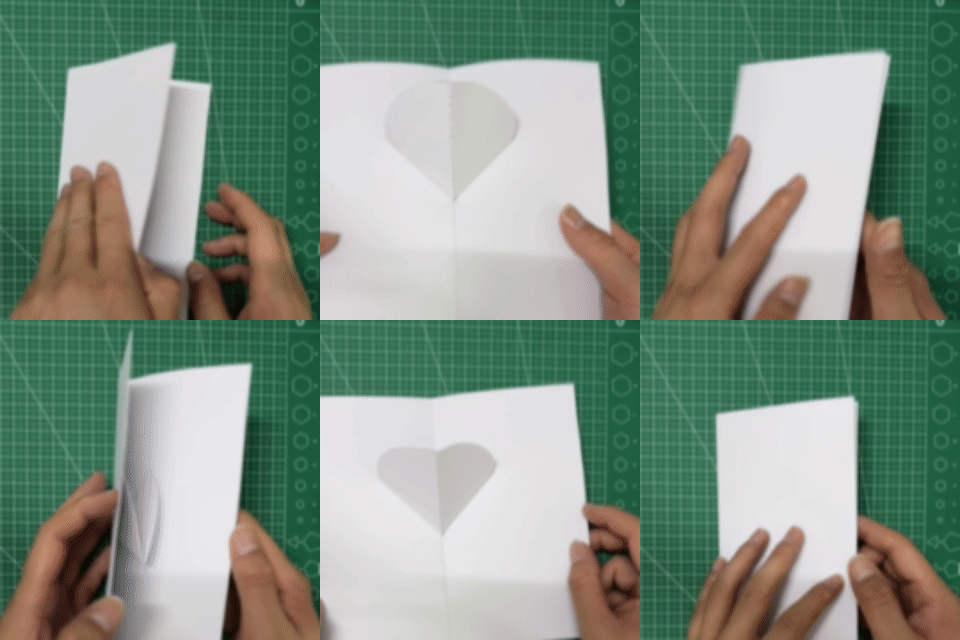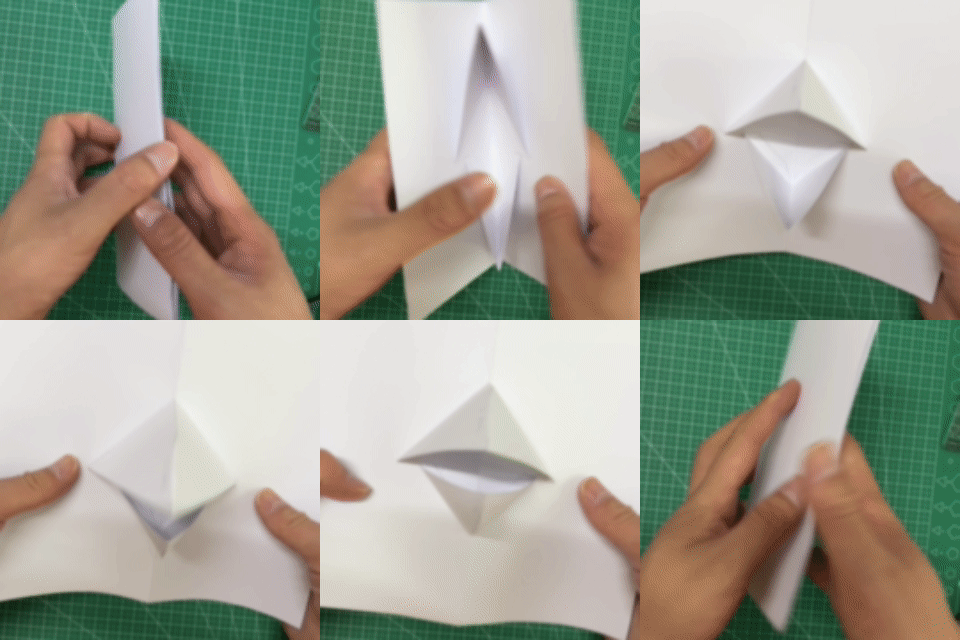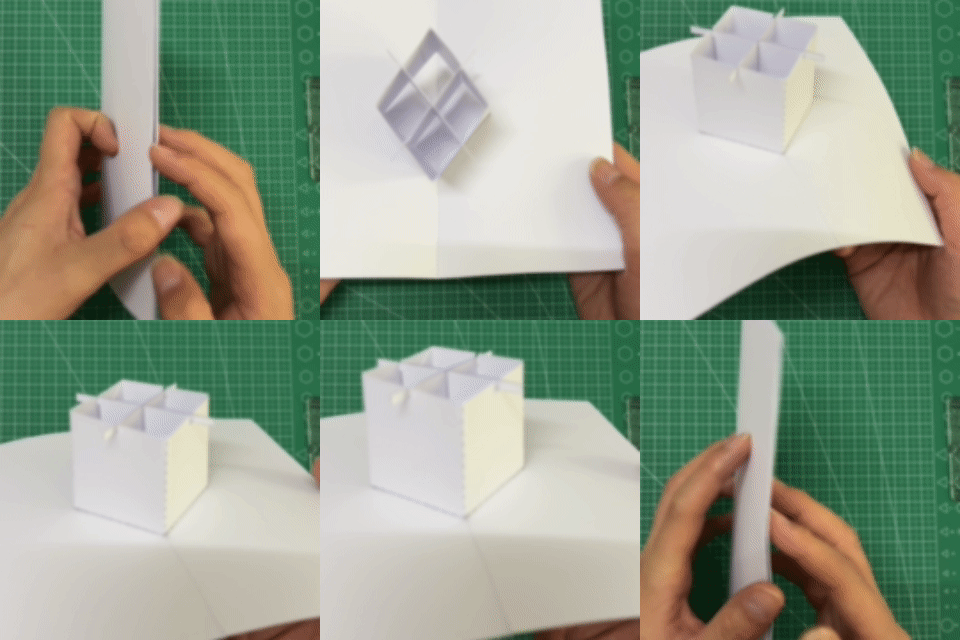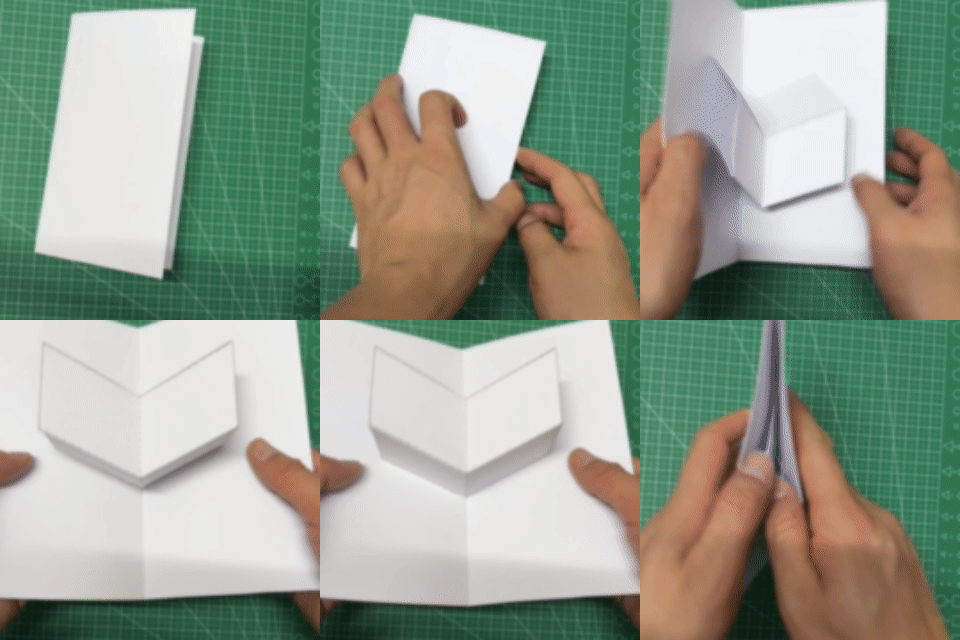
The 180 degree V-fold plane mechanism is a classic and highly practical pop-up book structure. With a simple V-shaped fold, it forms a stable floating plane when the spread opens fully to 180 degrees. That plane can carry other elements such as characters, buildings, titles, or decorative graphics, which makes it one of the core building blocks behind many more complex mechanisms.
Unlike a cube or box structure, the V-fold plane mechanism focuses more on structural support than on volume. Symmetrical or asymmetrical V-shaped fold lines lift a flat sheet into a raised plane and hold it at a stable angle, creating a clear three-dimensional effect without building a closed form.
In practice, this mechanism works well for pop-up titles, stage-style displays, layered backgrounds, and other scenes that need a reliable raised surface. Because the structure is simple and stable, it is especially suitable as a first V-fold mechanism for beginners, while also serving as an important support unit inside larger combined structures.
Mechanism Category
Primary Category: 180 Degree Mechanism
Core Structure: V-Fold Structure / Plane Support Structure / Foundational Mechanism / Expandable Structure
Structural Traits: A raised support plane driven by V-shaped fold lines that stays stable at a full 180 degree opening
Typical Uses: Pop-up titles / stage-style displays / layered backgrounds / support units in larger combined mechanisms
Let's fold it together. Here are the step-by-step instructions:
Step-by-Step Guide
Step 1: Prepare the materials for the 180 degree V-fold plane mechanism
Print the 180 degree V-fold plane mechanism template at A4 size. A 250g Dutch cardstock, or another heavyweight cardstock with similar stiffness, is recommended so the raised plane can support attached elements more reliably. Prepare a craft knife or fine scissors, double-sided tape or glue, and a cutting mat. In this type of plane-support mechanism, the stiffness of the paper and the precision of the cuts directly affect how flat and stable the lifted plane will be during opening.
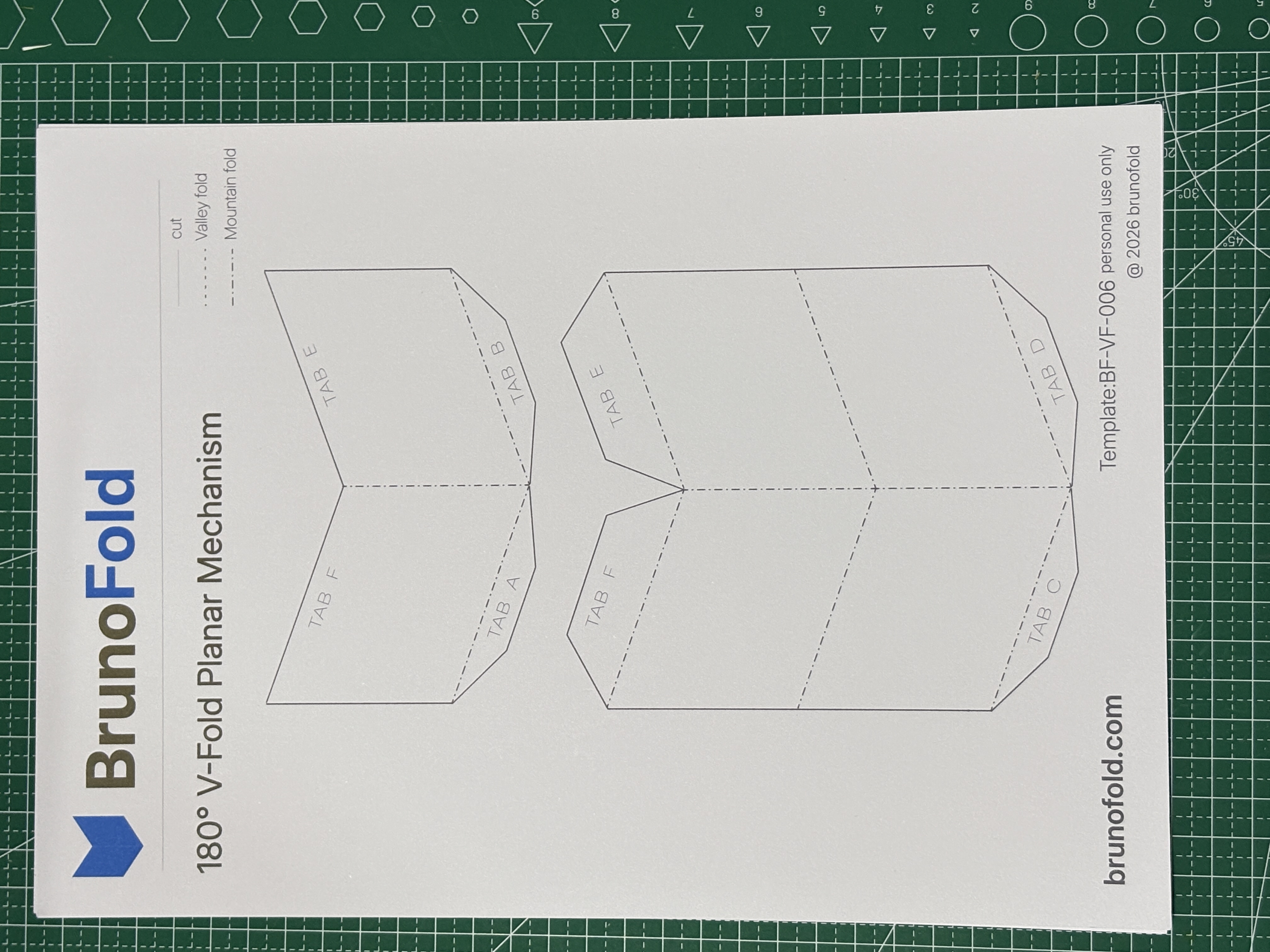
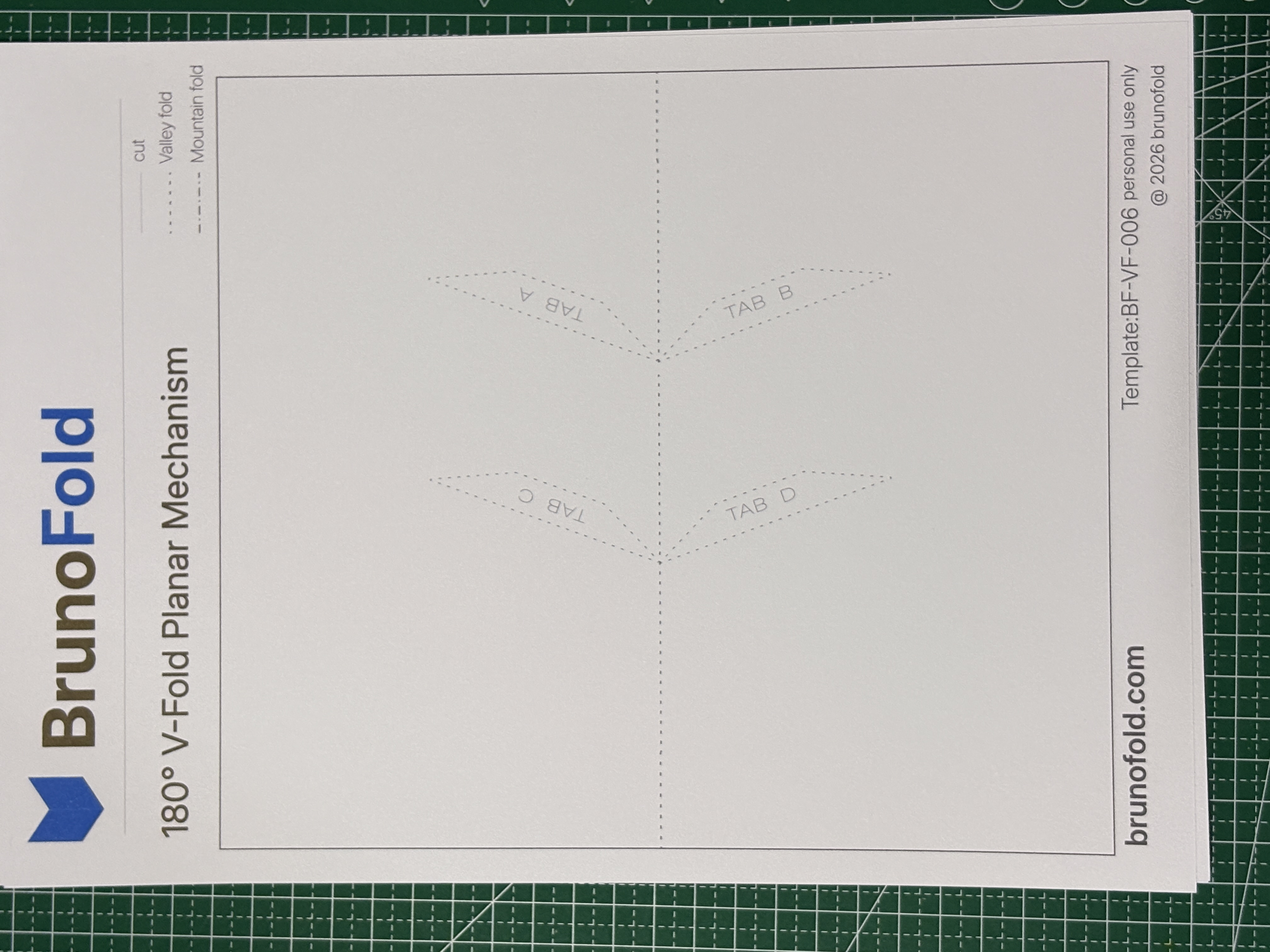
Step 2: Cut the outline and score the fold lines
Cut carefully along the outer boundary of the template, then score every marked fold line before folding. A ruler with an empty ballpoint pen or a scoring tool can help you create clean crease lines and make the mountain folds and valley folds easier to distinguish. In a 180 degree V-fold plane mechanism, accurate fold lines help the plane rise more naturally during opening while also reducing unwanted paper distortion.
Step 3: Assemble the mechanism and test the raised plane
Fold the structure slowly along the scored lines, then attach it to the card base and test the opening and closing motion. When the spread is opened fully to 180 degrees, check whether the plane opens in a stable way, whether the structure stays symmetrical, and whether the motion feels smooth. If the support plane feels weak or the movement is blocked, adjust the fold angles slightly or reinforce the creases again to improve the final dynamic result.
Note: Steps 2 and 3 currently reuse the Chinese visuals because separate English versions were not provided.
Next Article
180 Degree Opposed V-Fold Bird Beak Mechanism Tutorial | Dual V-Linkage Pop-Up Structure