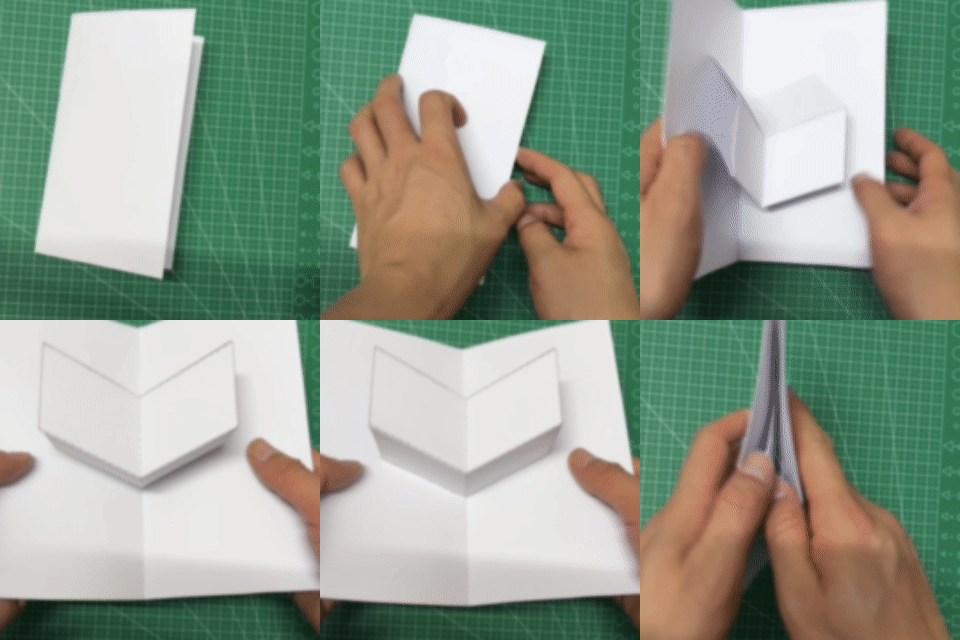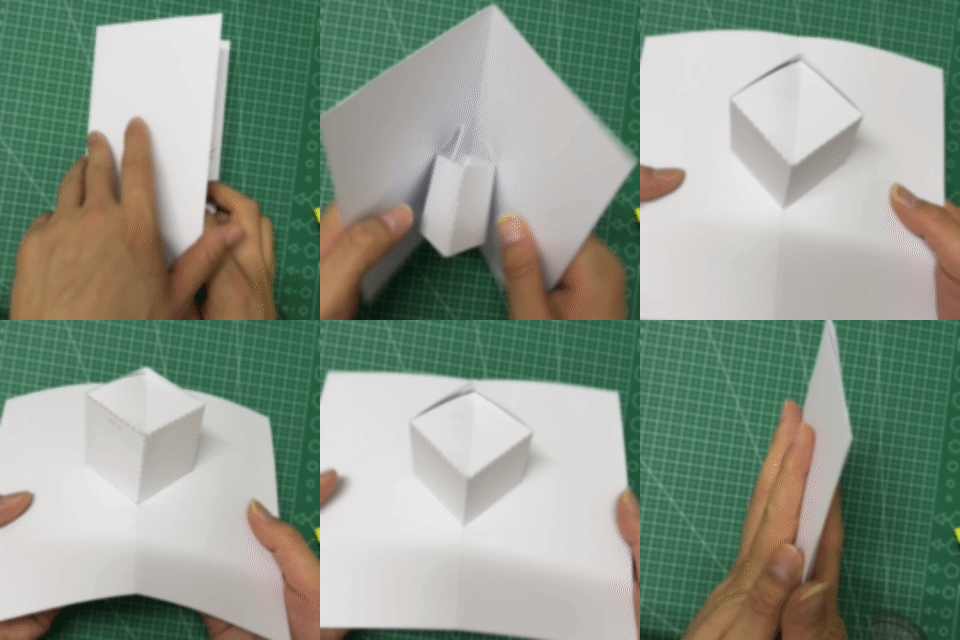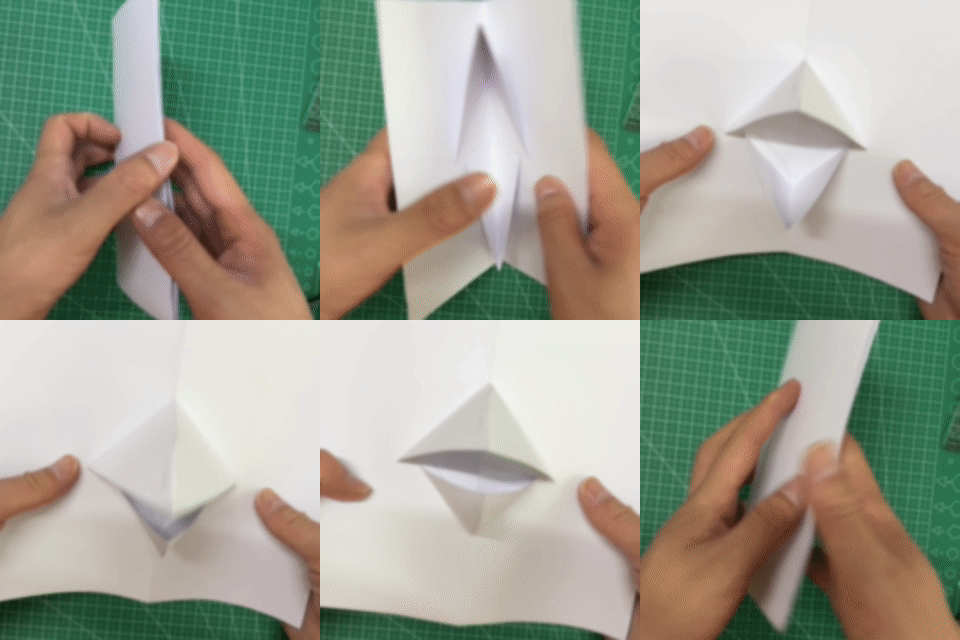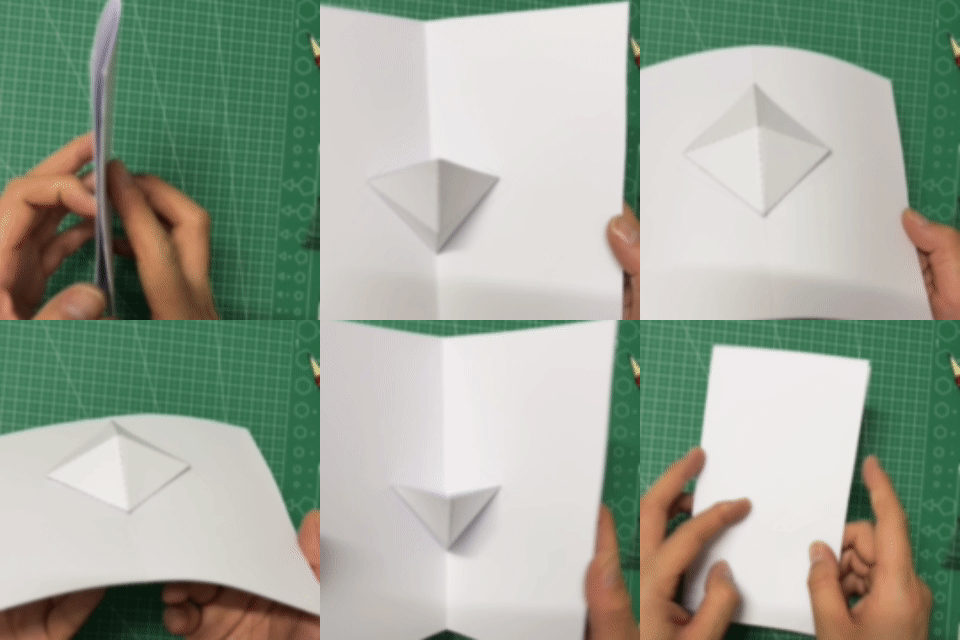
The 180 degree V-fold pyramid mechanism is a classic pop-up book structure built from the V-fold principle. As the spread opens, the pyramid rises in sync with the angled fold lines and forms a stable, clearly defined three-dimensional volume when the page reaches a full 180 degree opening. It combines geometric clarity with structural tension, which makes it useful for pop-up cards, architectural forms, abstract geometric layouts, and as a base unit for more advanced V-fold systems.
What makes this mechanism distinctive is the linked relationship between the triangular faces and the V-fold support lines. A flat sheet of paper transforms naturally into a raised pyramid as the page opens and closes. Compared with an open-box structure, this mechanism emphasizes diagonal support and a clear apex convergence, so it is especially representative when studying the logic of V-fold construction.
As a foundational mechanism template, it can also be extended into layered pyramids, parallel pyramid arrangements, or combined architectural pop-up structures. It is an important example for learning the 180 degree V-fold system.
Mechanism Category
Primary Category: 180 Degree Mechanism
Core Structure: V-Fold Structure / Pyramid Structure / Geometric Support Structure
Structural Traits: Coordinated triangular lift, clear apex convergence, stable diagonal support
Typical Uses: Pop-up cards / Architectural forms / Geometric compositions / Advanced V-fold practice
Let's fold it together. Here are the step-by-step instructions:
Step-by-Step Guide
Step 1: Prepare the materials and tools
Print the 180 degree V-fold pyramid mechanism template on 250g Dutch cardstock, or another 200-300g heavyweight cardstock, at A4 size. Prepare scissors or a craft knife, glue or double-sided tape, and a cutting mat or carving board. Heavier cardstock gives the slanted pyramid faces better support and structural stability during opening, which helps the mechanism move more smoothly.
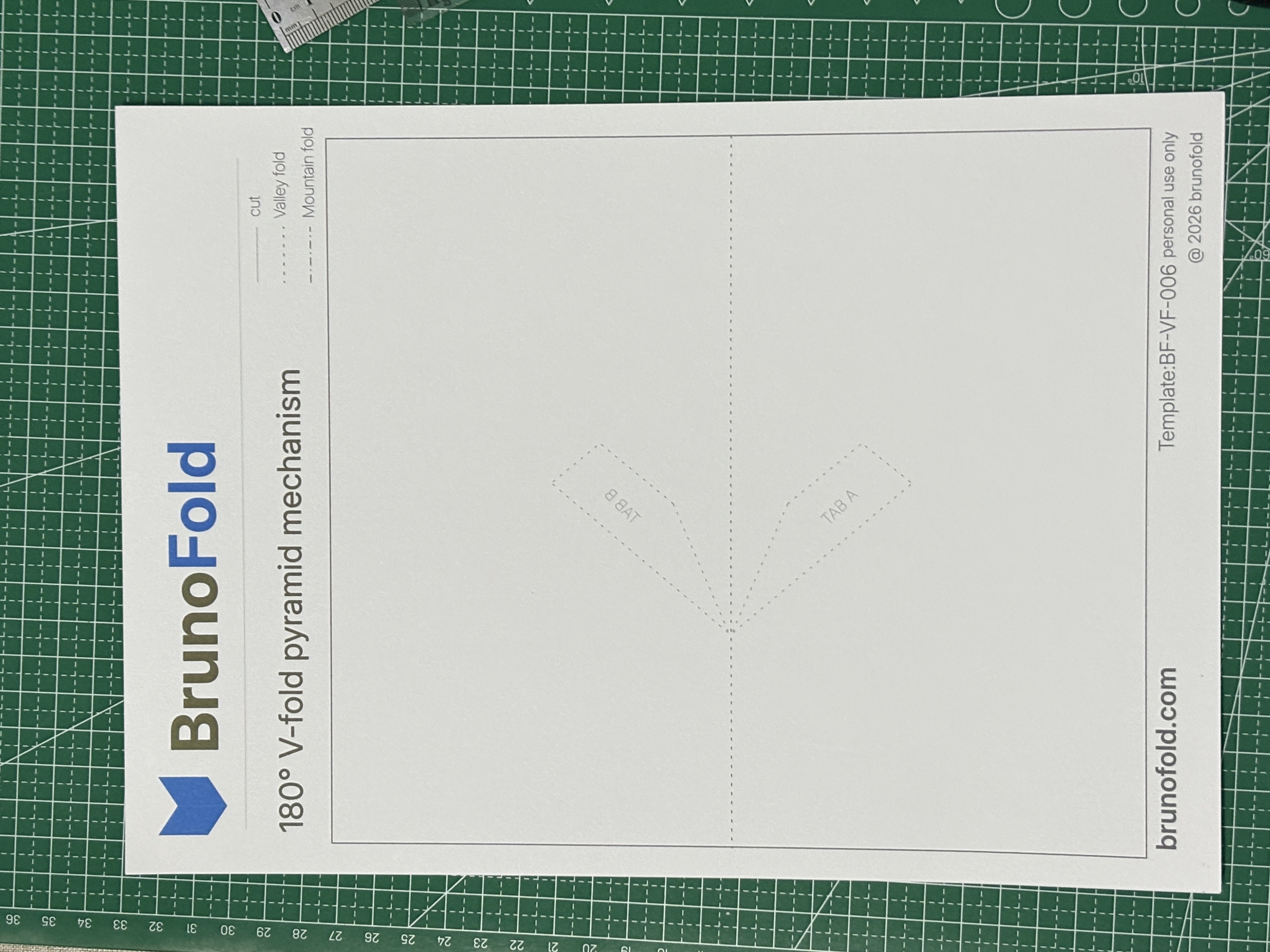
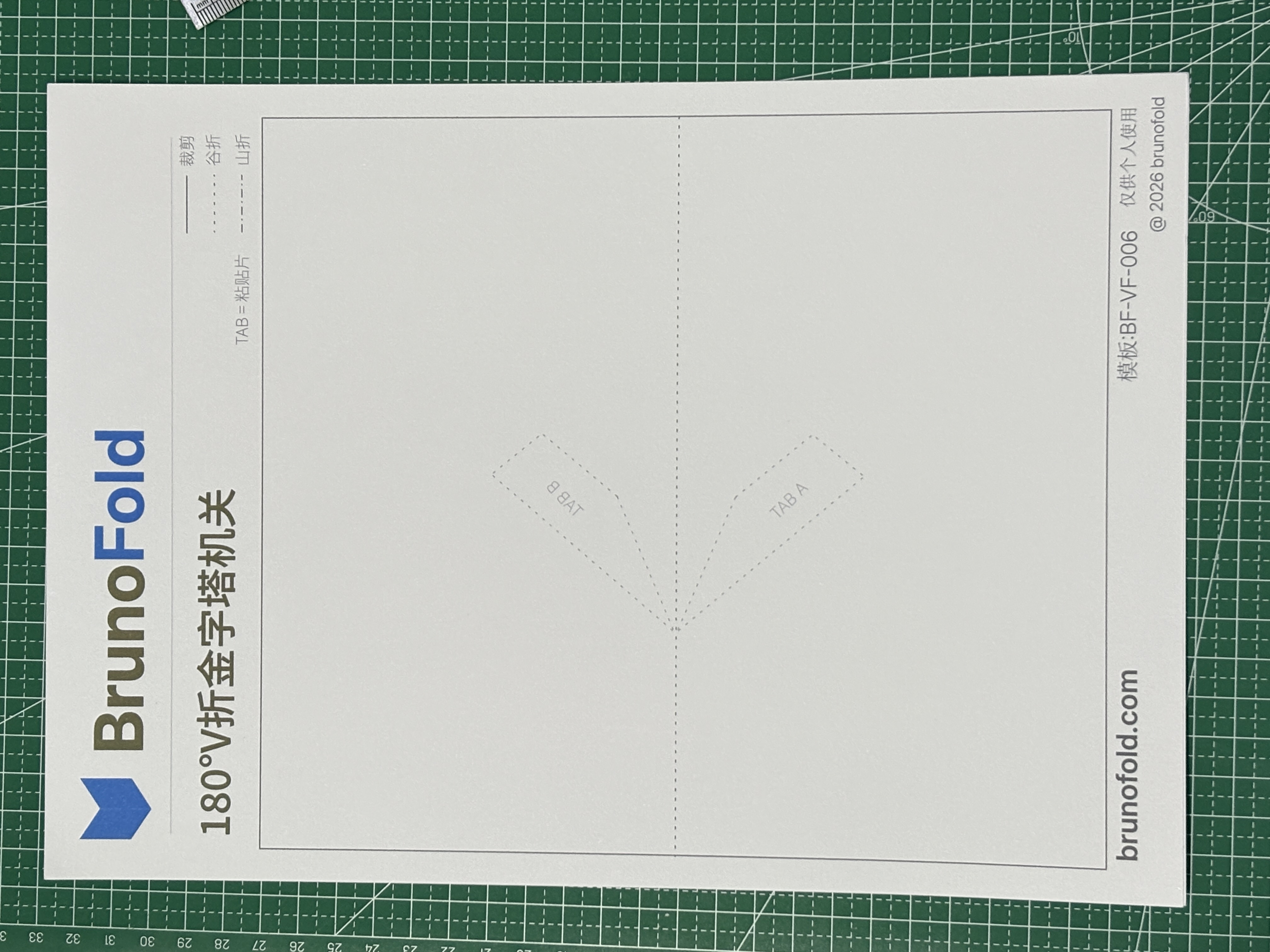
Step 2: Cut the template and score the fold lines
Cut the structure carefully along the outer contour of the template. Then use a ruler with an empty ballpoint pen, a scoring stylus, or another blunt tool to score all dashed fold lines. Pay close attention to the scoring precision around the main V-fold crease and the areas where it connects to the pyramid edges. Clean scoring helps the triangular faces fold more neatly and keeps the apex aligned when the structure closes.
Step 3: Fold slowly and test the pyramid as it rises
Follow the scoring directions to complete the mountain folds and valley folds, then fold the whole structure slowly while testing how the pyramid rises during opening and closing. When the spread is fully opened to 180 degrees, check whether the apex is aligned and whether the slanted faces are supporting the form evenly. If needed, adjust the fold lines or score them again so the mechanism opens smoothly and forms a stable three-dimensional pyramid.
Note: Steps 2 and 3 currently reuse the Chinese visuals because separate English versions were not provided.
Next Article
180 Degree V-Fold Plane Mechanism Guide | Foundational Support Structure